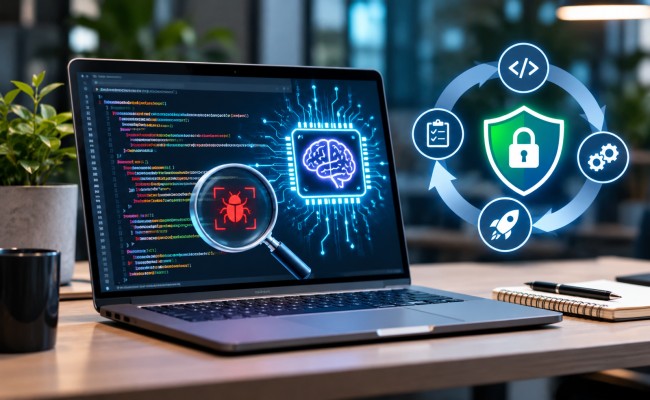
Software teams move fast. Sometimes too fast. A deadline looms, features pile up, and security gets pushed a little further down the sprint board than anyone wants to admit. That is where modern security tooling changes the mood entirely.
Instead of relying only on manual reviews and occasional testing, teams can build protection directly into the development rhythm. An AI code vulnerability scanner helps make that possible by turning security from a late-stage panic into an everyday habit.
That shift matters. Deeply. Because secure software is not just about compliance checklists or technical polish. It is about trust. It is about protecting customer data, preserving reputation, and helping developers sleep better at night.
When you strengthen the Secure Software Development Life Cycle, or Secure SDLC, you reduce surprises, shrink risk, and create a healthier engineering culture.
Why Secure SDLC Needs More Than Traditional Security Checks
Traditional security practices still matter, of course. Code reviews, penetration testing, static analysis, and policy controls all have a place. But modern development environments are noisy, complex, and relentless.
Microservices multiply the attack surface. Open-source dependencies introduce hidden exposures. CI/CD pipelines push code into production at astonishing speed.
In that kind of environment, human attention alone can become immoderate in all the wrong ways. A team lead once described a release week where alerts, comments, scans, and approval requests became so immoderate that everyone stopped noticing what truly mattered.
One small authentication flaw slipped through simply because the signal drowned in the clutter. That story stings because it is familiar. Too much unchecked complexity creates blind spots.
This is where AI begins to offer real value. It does not replace your security team. It strengthens their reach. It helps identify patterns, prioritize threats, and flag risky code earlier, before those issues harden into expensive incidents.
How an AI vulnerability scanner Supports Earlier Detection
An AI vulnerability scanner improves Secure SDLC by shifting security left in a practical way. Rather than waiting until the application is nearly finished, teams can scan code during development, at commit time, during pull requests, and throughout the build pipeline. That means developers get feedback while the code is still fresh in their minds.
This earlier detection does several important things:
- It reduces remediation cost
- It shortens feedback loops
- It lowers the chance of vulnerable code reaching production
- It teaches developers secure coding patterns over time
That final point is often overlooked. Developers do not just receive warnings. They learn. Repeated exposure to accurate, contextual security feedback can improve coding habits across the team. Over weeks and months, that creates a stronger engineering culture, not just a cleaner scan report.
How an AI code vulnerability scanner Improves Accuracy and Context
One of the biggest frustrations in security tooling is false positives. When developers are bombarded with alerts that do not matter, trust erodes. Adoption drops. Security becomes background noise.
An AI code vulnerability scanner helps by analyzing context, code behavior, historical patterns, and in some cases even the intent behind implementation choices.
This can improve the quality of findings and make alerts more actionable. Instead of simply saying, “something may be wrong here,” smarter tools can point to likely exploit paths, affected components, and practical fixes.
That is a huge emotional relief for teams under pressure. Security becomes less like an accusation and more like guidance.
There is also a cultural layer to this. In one company, a senior architect became strangely fastuous about old-fashioned manual processes, insisting that “real engineers” should catch everything by instinct alone.
It sounded grand, even noble. But the team was exhausted, defects kept surfacing late, and pride was getting in the way of progress. Once automated intelligence was added into the workflow, the tone changed. Less ego. More clarity. Better outcomes.
Key Ways AI Strengthens the Secure SDLC
To understand the full impact, it helps to look at the Secure SDLC stage by stage.
Planning and design
AI-driven tools can identify risky architectural patterns early. They can highlight insecure data flows, weak authentication designs, and areas where threat modelling deserves more attention.
Development
This is where the scanner shines brightest. It can review code in real time or near real time, helping developers catch vulnerabilities such as injection flaws, insecure deserialization, access control mistakes, hardcoded secrets, and unsafe API usage before merge.
Testing
Security testing becomes more dynamic when AI helps correlate code-level weaknesses with runtime behavior. This improves prioritization and helps teams focus on exploitable risks instead of every theoretical issue.
Deployment
Integrated into CI/CD, scans can enforce security gates and prevent high-risk code from moving forward without review.
Maintenance
After release, AI can continue monitoring codebase changes, emerging CVEs in dependencies, and patterns that suggest regressions or newly introduced weaknesses.
How Teams Benefit Beyond Security Alone
The benefits are not limited to vulnerability detection. An AI security scanner can improve productivity, reduce burnout, and support better collaboration between security and engineering teams.
Why? Because speed and safety no longer need to feel like enemies.
When findings are prioritized, developers spend less time chasing low-value alerts. When remediation advice is clear, teams fix issues faster. When security appears continuously instead of suddenly, it feels less disruptive.
There is even something unexpectedly hopeful about this. A startup founder once described the moment their release pipeline finally included intelligent security checks as “a small paradise in the middle of chaos.” It was not paradise in the literal sense, of course.
The bugs did not vanish. The deadlines did not disappear. But the fear eased. The team felt protected instead of exposed. That emotional shift matters more than many leaders realize.
Choosing the Right AI code vulnerability scanner for Your Workflow
Not every tool fits every team. The right choice depends on your stack, development practices, compliance needs, and tolerance for workflow disruption.
When evaluating options, look for:
- Strong language and framework support
- Integration with IDEs, repositories, and CI/CD platforms
- High-quality vulnerability prioritization
- Clear remediation guidance
- Low false positive rates
- Reporting for developers and security leaders
- Support for policy enforcement and audit needs
Most importantly, choose a tool that developers will actually use. Adoption is everything. If the product slows teams down or confuses them, value fades quickly.
Building a Safer Development Culture
Technology alone is never the whole answer. Even the best AI code vulnerability scanner works best inside a culture that values shared responsibility. Security should not belong only to one department. It should be part of how everyone builds, reviews, tests, and ships software.
That is the real promise here. Better tools, yes. Faster detection, yes. But also a calmer, more confident way to build.
When security is embedded into every stage of the SDLC, teams can move with more courage. They make fewer costly mistakes. They respond faster when risk appears. And they earn something every software company desperately needs from users: trust.
An AI vulnerability scanner supports that trust by helping teams see problems sooner and act with greater precision. In a world where software powers nearly everything, that is not just useful. It is essential.
Also Read: