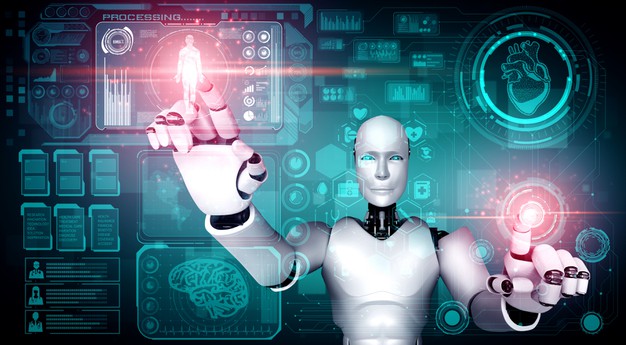
Artificial intelligence is no longer a research experiment sitting behind academic walls. Healthcare systems now deploy algorithms in clinics, hospitals, laboratories, and remote care platforms.
Decisions once driven by human judgment alone now share space with models trained on millions of data points. The shift feels quiet on the surface. Underneath, structures are changing fast.
Healthcare carries pressure from rising patient volumes, workforce shortages, aging populations, and cost constraints. AI steps into these gaps with pattern recognition, automation, and predictive analysis.
Not hype. Practical change. Each use case pushes medicine toward speed, accuracy, and scale that human-only workflows cannot maintain.
Understanding Artificial Intelligence In Healthcare
Artificial intelligence in healthcare refers to software systems that analyze medical data, learn from outcomes, and assist in clinical or operational decisions. These systems rely on machine learning, deep learning, natural language processing, and computer vision.
Unlike traditional software, AI models adapt. Performance improves as exposure to new data grows. Medical images, electronic health records, lab results, wearable signals, and genomic data feed these systems continuously.
Healthcare AI does not replace clinicians. It augments judgment, flags risks, and reduces cognitive load. Human oversight remains central. Automation handles repetition. Clinicians handle accountability.
Medical Imaging And Diagnostic Accuracy
Radiology and pathology were early adopters. Image-heavy workflows fit machine learning strengths.
AI systems now scan X-rays, CT scans, MRIs, and digital pathology slides. These tools detect anomalies such as tumors, fractures, hemorrhages, and tissue irregularities. Pattern matching occurs at scale. Subtle variations often missed by fatigued eyes stand out clearly to trained models.
Turnaround time shrinks. Diagnostic backlogs reduce. Clinicians receive flagged regions rather than raw images, improving focus and confidence.
False positives still exist. Continuous training and validation remain mandatory. Used correctly, AI acts as a second reader, not a final judge.
Predictive Analytics And Early Disease Detection
Healthcare produces time-series data. Vitals, lab trends, medication histories, and lifestyle indicators evolve over time. AI models excel at tracking these trajectories.
Predictive systems identify patients at risk of deterioration, hospital readmission, sepsis, cardiac events, or chronic disease progression. Alerts trigger before symptoms escalate.
Early detection shifts care from reactive to preventive. Interventions happen sooner. Costs drop. Outcomes improve.
Predictive analytics also supports population health management by highlighting risk clusters across regions or demographics, allowing targeted intervention programs.
Personalized Treatment And Precision Medicine
Standardized treatment protocols often ignore biological variability. AI changes that equation.
Machine learning models analyze genetics, biomarkers, imaging data, and treatment responses to suggest personalized care paths. Oncology benefits heavily from this approach. Cancer subtypes respond differently to identical therapies. AI identifies those differences faster.
Drug dosing adjustments, therapy selection, and treatment sequencing all gain precision. Trial-and-error medicine gives way to data-backed personalization.
Precision medicine shortens recovery cycles and reduces adverse reactions. Data volume drives quality here. More records lead to sharper predictions.
AI In Drug Discovery And Development
Drug discovery remains expensive and slow. AI compresses timelines.
Algorithms screen chemical libraries, simulate molecular interactions, and predict compound efficacy. Failures surface early. Promising candidates move forward faster.
Clinical trial design also improves. Patient selection becomes more accurate. Dropout rates decrease. Safety signals appear earlier.
Pharmaceutical pipelines benefit from reduced research waste and focused investment. The result: faster delivery of effective therapies.
Robotic Surgery And Assisted Procedures
Surgical robotics combined with AI introduces precision beyond steady hands.
AI-guided systems assist with incision planning, tissue differentiation, and instrument positioning. Real-time data feeds help surgeons adjust mid-procedure.
These systems do not operate independently. Surgeons remain in control. AI provides situational awareness, consistency, and repeatability.
Post-operative outcomes improve through reduced error margins and minimized tissue trauma. Training also benefits as simulation environments mirror real-world variability.
Virtual Health Assistants And Patient Engagement
Administrative overload drains healthcare efficiency. AI-powered assistants step in.
Chatbots handle appointment scheduling, symptom intake, medication reminders, and post-discharge follow-ups. Patients receive consistent responses around the clock.
Natural language processing allows systems to interpret unstructured patient input. Tone matters. Clarity matters. Engagement improves when responses feel direct and timely.
Clinicians gain time. Patients gain access. Care continuity strengthens outside clinical walls.
Remote Monitoring And Wearable Integration
Wearables generate continuous health data. Heart rate, sleep cycles, oxygen saturation, glucose levels, and activity patterns stream constantly.
AI filters noise from signal. Deviations trigger alerts. Long-term trends inform care decisions.
Remote monitoring supports chronic disease management and post-operative recovery. Hospital stays shorten. Home-based care expands safely.
Data security remains a concern. Encryption and access controls must evolve alongside adoption.
Operational Efficiency And Hospital Management
Clinical care is only part of healthcare. Operations decide sustainability.
AI optimizes scheduling, staffing, supply chain management, and bed allocation. Predictive models anticipate patient inflow. Resource allocation adjusts dynamically.
Billing and coding automation reduces errors and accelerates reimbursement. Fraud detection systems flag anomalies before losses escalate.
Operational intelligence improves margins without compromising care quality. Efficiency becomes measurable, not aspirational.
Ethical Challenges And Bias Control
AI reflects the data it learns from. Biased data produces biased outcomes.
Healthcare datasets often underrepresent certain populations. If left unchecked, AI systems amplify disparities. Continuous auditing becomes non-negotiable.
Transparency matters. Clinicians must understand why a model produced a recommendation. Black-box decisions erode trust.
Regulatory oversight, diverse training datasets, and human review loops mitigate these risks. Ethics governance must move as fast as innovation.
Data Privacy And Security Concerns
Healthcare data ranks among the most sensitive categories. AI increases exposure surface.
Secure data pipelines, anonymization techniques, and strict access controls protect patient information. Regulatory frameworks enforce compliance, but technical safeguards carry equal weight.
Cybersecurity strategies must adapt to AI workloads. Attackers target models, data integrity, and inference systems.
Trust determines adoption. Without security assurance, progress stalls.
Regulatory Evolution And Clinical Validation
Healthcare AI operates under strict regulatory scrutiny. Clinical validation remains mandatory.
Models require testing across diverse environments before deployment. Performance metrics must reflect real-world variability, not lab conditions.
Regulators continue refining approval pathways for adaptive algorithms. Static evaluation no longer fits systems that learn continuously.
Clear governance balances innovation with patient safety. Slow approval delays benefit delivery. Loose oversight risks harm.
Workforce Transformation And Skill Shifts
AI reshapes healthcare roles rather than eliminating them.
Clinicians focus on interpretation, empathy, and complex judgment. Administrative roles shift toward oversight and exception handling. Data literacy grows essential across departments.
Training programs evolve. Medical education now includes data analysis, AI ethics, and system collaboration.
The workforce adapts. Resistance fades as benefits become tangible.
The Road Ahead For AI-Driven Healthcare
Artificial intelligence reshapes healthcare through steady integration, not sudden replacement. Each improvement compounds. Diagnostics sharpen. Care becomes proactive. Operations stabilize.
Challenges persist. Bias control, data security, regulation, and trust demand constant attention. Ignoring these risks undermines progress.
The future of healthcare aligns with systems that learn, assist, and adapt. AI supplies the engine. Human expertise provides direction. Together, they form a healthcare model built for scale, resilience, and informed care delivery.
Progress continues. Quietly. Relentlessly.
Also Read: